
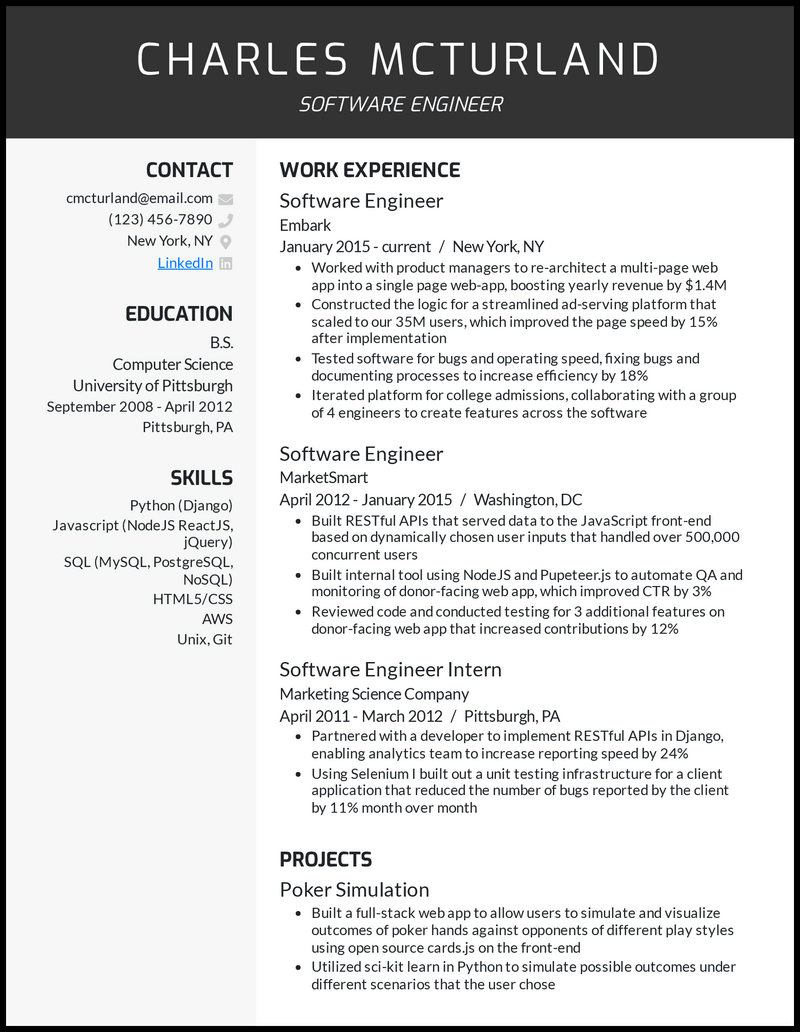
When it comes to applying for a software engineering job, getting noticed can be a challenge. With so many applicants vying for the same positions, you need to make sure your resume stands out. In this guide, we will provide you with valuable tips and examples to help you create a winning software engineer resume.
The Importance of the Skills Section
The skills section is one of the most crucial parts of your resume. It’s essential to showcase your expertise in a way that grabs the attention of hiring managers and passes through Applicant Tracking Systems (ATS). Avoid creating a laundry list of programming languages and frameworks. Instead, focus on showcasing your true expertise in one or two key areas. Remember, quality engineers can learn new frameworks as needed, so there’s no need to list every programming language under the sun.
When organizing your skills section, you have a few options. You can categorize your skills by proficiency level or by skill type. Another option is to list the programming languages you know and include the associated frameworks and years of experience. Just make sure your resume format allows for an extended skills section.
Crafting an Effective Resume Format
Formatting your resume correctly is crucial to grab the attention of recruiters. Keep your resume to one page, as recruiters typically spend only a few seconds reviewing each resume. Use bullet points to highlight your achievements and make your resume easier to read. Avoid long paragraphs and use concise, self-contained bullet points to showcase your experience and expertise.
Ensure consistency in verb tenses and avoid using pronouns like “I” or “we.” Instead, focus on the actions and achievements themselves. It’s also essential to review your resume for grammar and spelling errors to make a professional impression.
Your contact information should be clearly listed at the top of your resume, along with your name and a title that matches the job you’re applying for. Triple-check for accuracy, as a simple mistake in your contact information can cost you an interview opportunity.
Education Section: Tailored to Your Experience
The education section of your resume will vary depending on your experience level. For entry-level roles, include the school you attended, the year you graduated, and your major. If you had a minor or specific concentration, mention that as well. For more senior roles, focus on your work experience and projects, as they convey more about your qualifications.
If you’re applying for an internship or your first full-time role, expand your education section to include relevant courses that demonstrate your skills. Mention any relevant classes related to software engineering, such as databases or algorithm design.
Omitting Summary/Objective Statements
Avoid including a resume summary or objective unless you have unique circumstances or are undergoing a career change. These statements rarely provide meaningful information to recruiters, who typically spend a short time reviewing each resume. Instead, focus on showcasing your skills and experience through your work experience and projects.
Highlighting Work Experience: Be Specific and Quantify Impact
The work experience section is the most critical part of your resume. Make sure to highlight your achievements and quantify their impact whenever possible. Be specific about your contributions to each project and how they positively affected the overall outcome. Businesses hire engineers to drive company progress, so showing measurable impact is crucial.
When discussing your work experience, mention your specific role on each project. However, when highlighting the project’s impact, focus on the overall effect the team had. Use numbers, percentages, and other metrics to quantify your achievements and demonstrate your value.
Showcasing Projects: Adding Context to Skills
Include a projects section on your resume to provide more context to your skills. Mention projects that demonstrate your technical abilities and problem-solving skills. Describe how you used programming languages or frameworks to build something that solved a problem or satisfied your curiosity. If you have substantial coding projects from school, list them as well and provide links to your GitHub or personal website for further reference.
Adding Personal Interests: Showcasing Personality
If you have space, consider including personal interests or hobbies that may interest employers. Some companies appreciate candidates with unique personalities, so highlighting your interests can make a positive impression.
Tailoring Your Resume for Each Job Application
While customizing your resume for each job application may seem tedious, it’s crucial to stand out from the competition. Read the job description carefully and make sure to include relevant projects or languages that align with the role. By tailoring your resume to the specific job requirements, you increase your chances of getting noticed by recruiters.
Final Tips for a Professional Resume
To summarize, here are some key points to keep in mind when writing your software engineer resume:
- Keep your resume to one page.
- Proofread multiple times to avoid grammar or spelling errors.
- Tailor your education section based on your experience level.
- Avoid summary/objective statements unless necessary.
- Only include skills for which you are comfortable being interviewed.
- Be specific and quantify the impact of your work experience.
- Highlight personal coding projects, especially for entry-level roles.
- Include personal interests to showcase your personality.
- Customize your resume for each job application, focusing on relevant skills and projects.
Remember, your resume’s goal is to get your foot in the door. Once you secure an interview, your skills and personality will shine through. Good luck in your job search and go land your dream software engineering job!
Read More: Software