
Live streaming is more than just a trend. It’s a revolution in how we share and consume video content. From influencers going live, showcasing their knowledge, and connecting with their audience to gamers sharing epic online battles, live streaming is transforming the digital landscape. The global live streaming market grew from $1.24 billion in 2022 to $1.49 billion in 2023 and is expected to exceed $3 billion in 2027. But why is live streaming such a big deal in 2024?
The answer is simple. Video has become the king of content. Everyone loves to watch videos, whether to learn something new, for entertainment, or just to connect with others. Plus, after the pandemic, people are spending more time streaming live videos than ever before, from the comfort of their own homes.
To ensure seamless live streaming, you need reliable live streaming software.
What Is Live Streaming Software?
Live streaming software is an application or platform that enables you to broadcast live video and audio over the internet. It captures, encodes, and streams audio and video from various sources such as cameras, microphones, or screen captures. A good live streaming software includes features like mixing multiple sources, adding graphics, text overlays, encoding for different formats, and distributing the content to popular platforms like YouTube, Instagram, or Facebook.
From personal vlogs to gaming streams, church services to professional webinars, live streaming is widely used for a range of purposes. The core component of any live streaming software is an encoder, which converts the video input into a digital format for live streaming. With so many good live streaming software options available, it can be challenging to choose the right one. That’s why today, we will discuss the best live streaming software – the good, the great, and the life-changing. This will help you make an informed decision for your streaming needs.
How to Choose the Best Live Streaming Software?
Choosing the right live streaming software is crucial for individuals and businesses who want to excel in the streaming world. Here are a few things to consider when selecting a software:
- Purpose of the stream and content type: Consider whether you’re streaming educational content, gaming, webinars, live events, or something else. Different platforms serve different types of content, so choose the one that aligns with your goal.
- Audience size: A larger audience requires more bandwidth and higher stream quality. Ensure your software can support your needs.
- Features and interactivity: Look for basic features like multiple source mixing, encoding, and overlays. Additionally, consider interactivity features like chats, polls, Q&A, and quizzes to engage a larger audience.
- Ease of use and compatibility: Opt for a user-friendly interface and straightforward integration options with popular live streaming platforms. Also, check for compatibility with your existing hardware and devices.
- Bandwidth and quality: Depending on your needs, ensure that the software you choose supports high-resolution streaming quality.
- Cost: Consider your budget. Free options are available for basic streaming, while paid versions offer more advanced features. Evaluate your needs accordingly.
- Customization: Decide if you need basic customization options like editing or text overlays or if you want to add a theme to your streams that matches your brand style.
- Support: Check if the software comes with good customer support, especially when you’re new to the streaming world and have a growing audience.
- Analytics: Detailed analytics and insights can help you grow and understand your audience better, so look for software that provides these features.
- Monetization: If monetization is your goal, especially for a larger audience, consider software options that offer integrated monetization features.
- Scalability: If you anticipate a larger audience in the future, choose software that can handle your scalability needs without lag or quality issues.
Consider these factors based on your streaming usage to make an informed decision about which live streaming software to use.
Top 16 Live Streaming Software Ranked
We have ranked all popular live streaming software based on their pros and cons. We have considered factors like versatility, user-friendliness, feature richness, cost-effectiveness, and suitability for different user groups. Let’s go through each one of them:
1. OBS Studio – “Open Broadcaster Software”
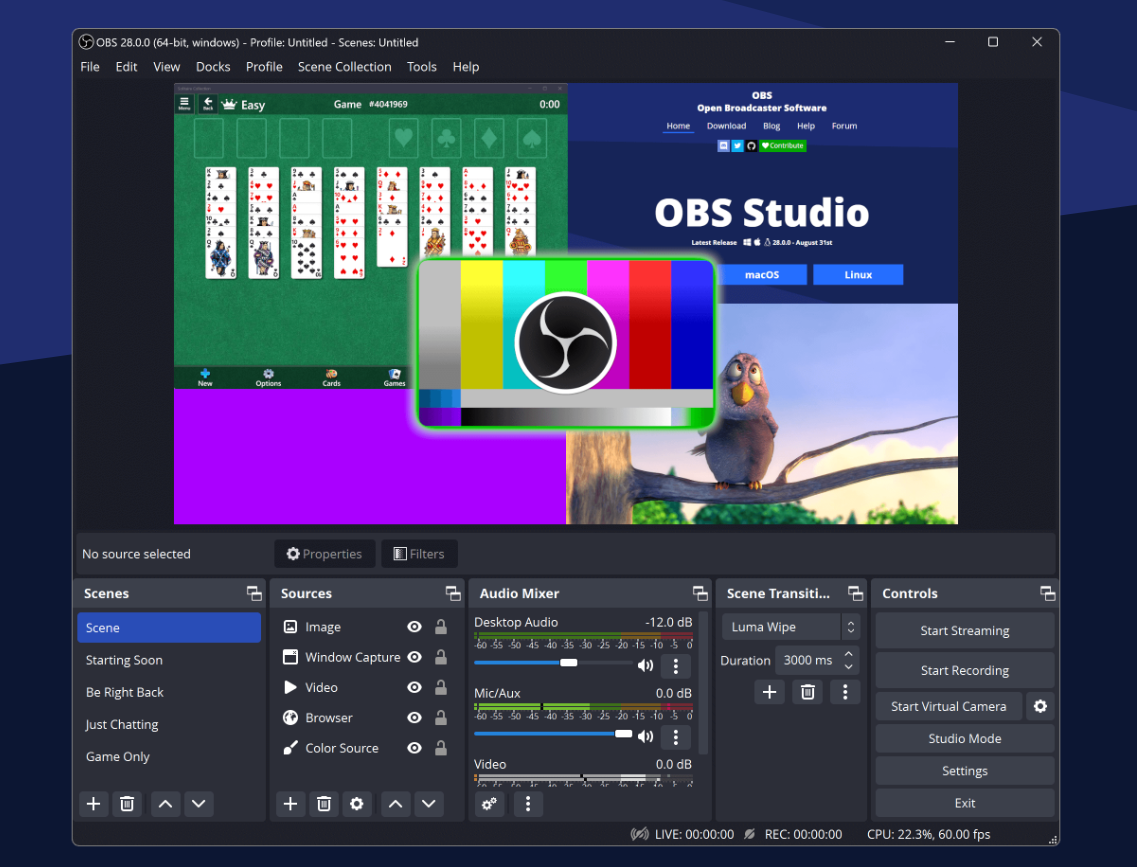
OBS Studio is a robust, free live streaming software known for its high-definition screen capture and video recording capabilities. It’s highly favored for its user-friendly interface and versatile functionality, supporting various platforms and offering extensive customization options for streamers and content creators. OBS Studio is a must-have tool for your live streaming website.
Pros:
- Completely free and open-source.
- Offers real-time video/audio capturing and mixing.
- Unlimited number of scenes with customizable transitions.
- Intuitive audio mixer with filters like noise gate, suppression, and gain.
- Easy-to-use configuration options and a streamlined settings panel.
- Modular ‘Dock’ UI allows users to rearrange the layout.
- Set hotkeys for various actions and use Studio Mode to preview scenes and sources.
- High-level view of the production for easy transition between scenes.
- Equipped with a powerful API for plugins and scripts.
Cons:
- Features may be overwhelming for new users.
- Dropped frames may occur with unstable internet connections.
- Some issues after updating OBS.
- Manual adjustment of settings for optimal quality.
- No direct customer support, but a large community for help.
2. Wirecast
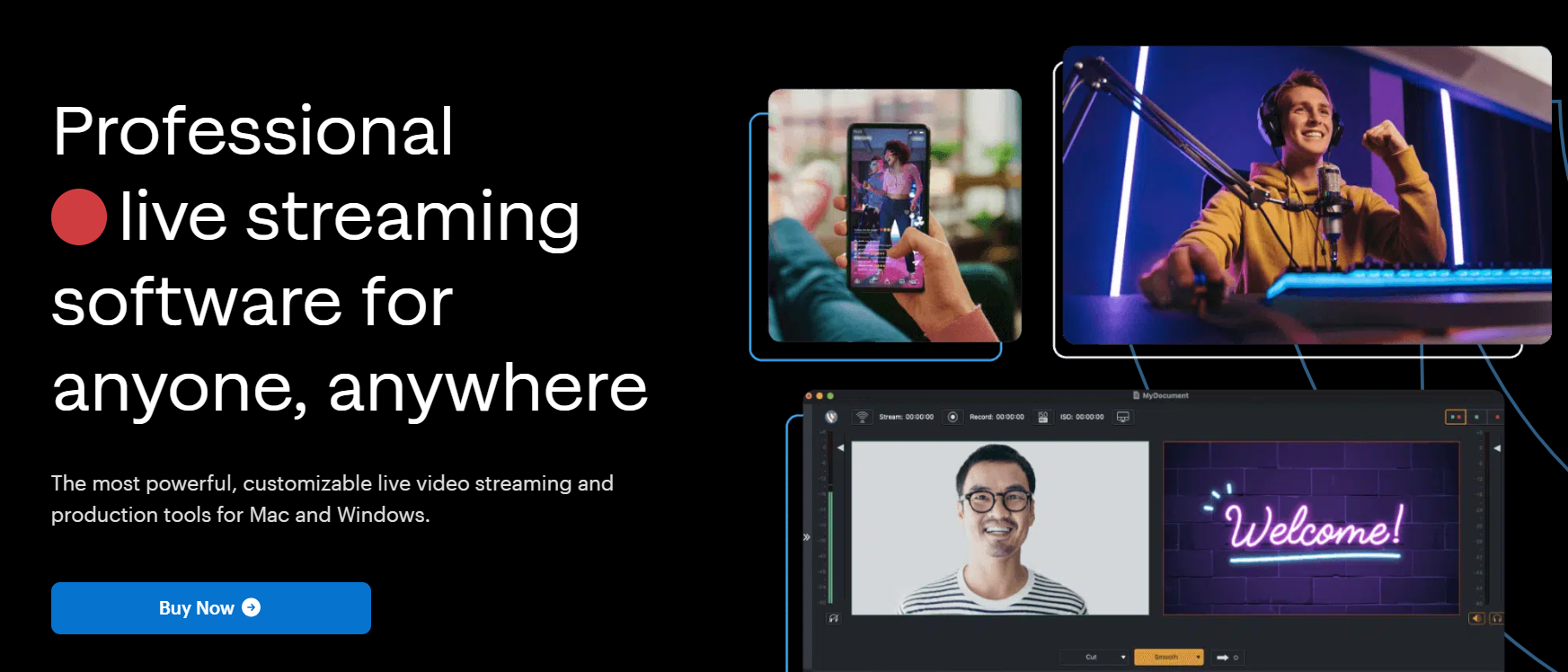
Wirecast is a comprehensive live streaming software that offers customizable tools for Mac and Windows users. It supports multiple cameras, integrates with control surfaces, and allows guest participation from anywhere in the world. With layer-based compositing, you can mix different video sources and graphics, creating a mini-TV studio.
Pros:
- Multiple camera support.
- Control PTZ cameras and integration with control surfaces.
- Bring in guests for interviews or collaborations.
- Layer-based compositing for mixing video sources and graphics.
- Record isolated feeds and use virtual cameras and microphones.
- Over 12 multilingual languages customer support.
- Stream to multiple platforms simultaneously.
- Access to over 500,000 stock media assets.
Cons:
- Overwhelming for beginners.
- Higher cost compared to other options.
- Requires a powerful computer for smooth performance.
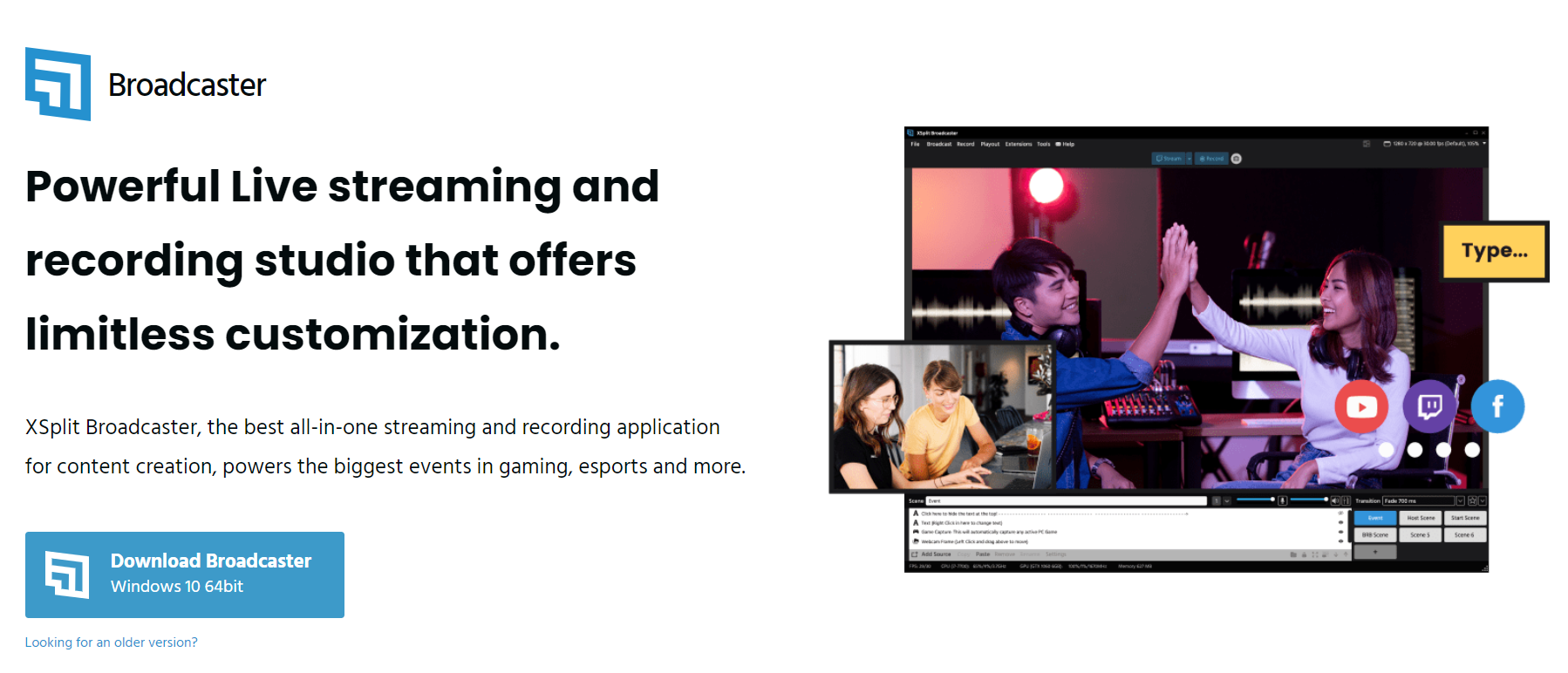
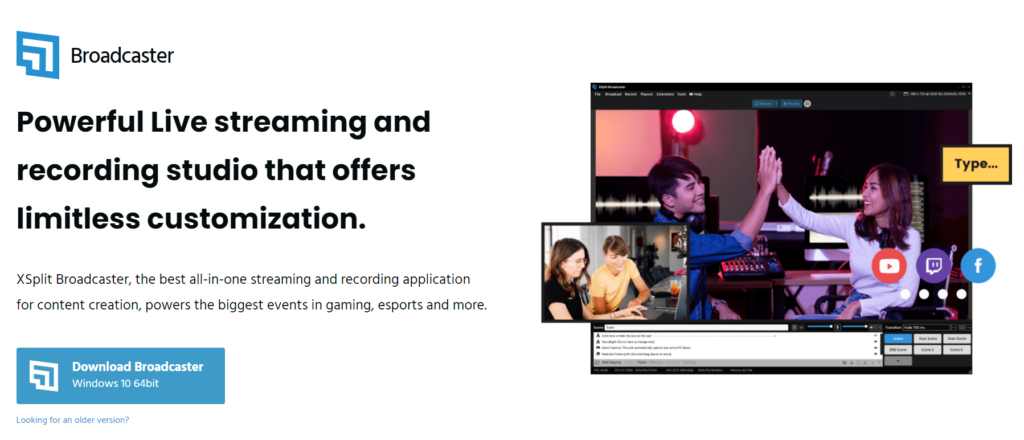
3. X-Split Broadcaster
XSplit Broadcaster is an all-in-one streaming and recording application designed for gaming and esports content creators. It offers powerful live video streaming and recording studio capabilities with unlimited customization options.
Pros:
- Layout Wizard for easy switching between streaming setups.
- User-friendly interface with drag-and-drop functionality.
- Streaming to major platforms with native plugins or Custom RTMP.
- Simultaneous streaming to multiple platforms.
- Scene presets, noise suppression, media slideshow, and custom transitions.
- NVIDIA Encoding for improved streaming performance.
- Recording different scenes simultaneously with multiple audio tracks.
- Macros, Custom Scripts, and APIs for personalized broadcast settings.
- High-end support and lifetime updates.
Cons:
- Some features require a premium license.
- Complex audio settings configuration.
- Challenging for new users.
- Managing licenses for a team can be complex.
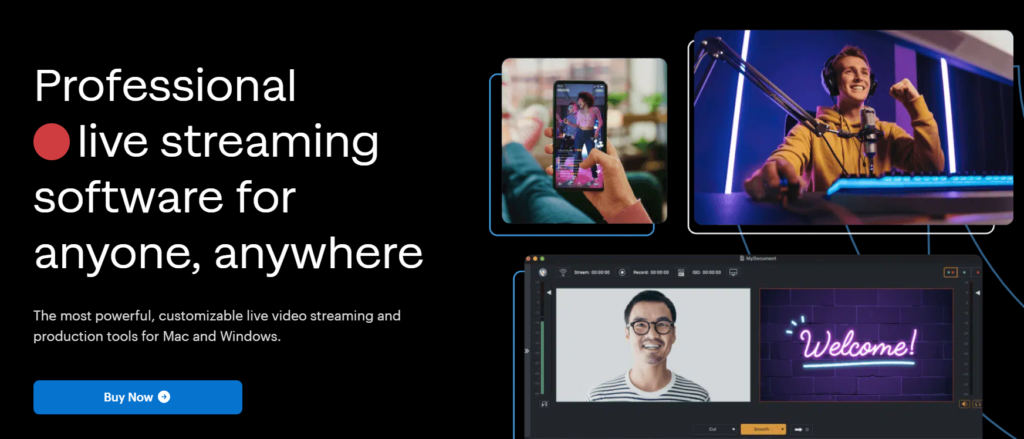
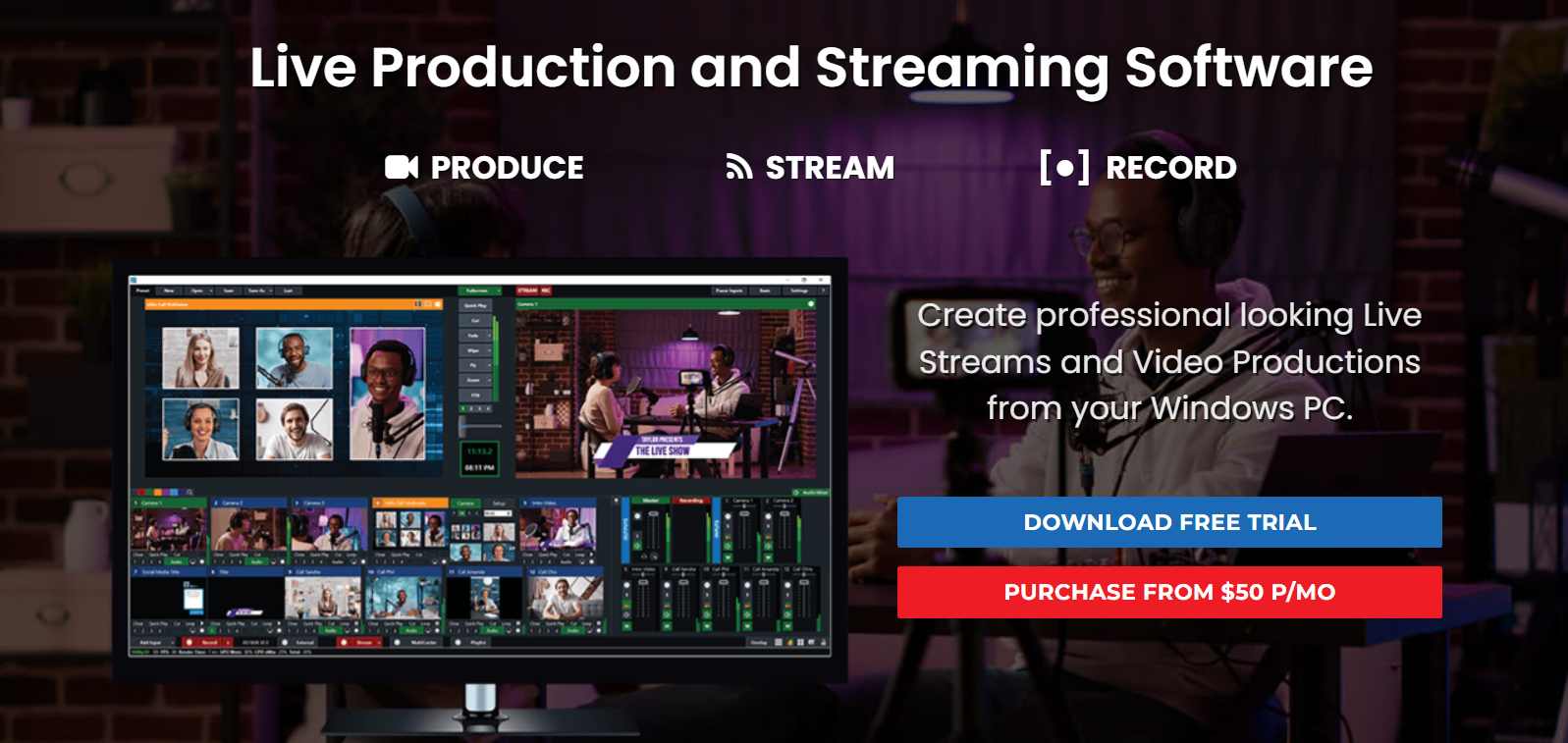
4. vMix
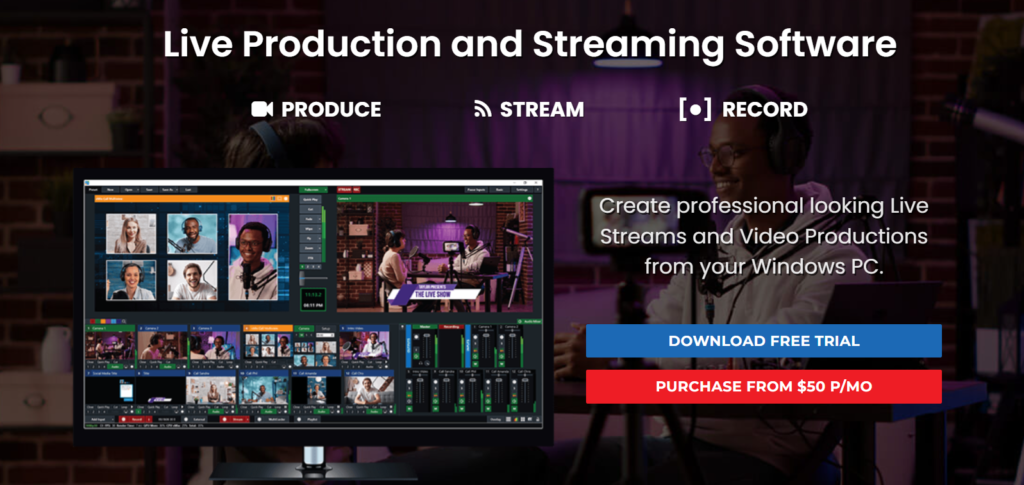
vMix is a versatile, Windows-based live video production software that excels in live streaming, input switching, and audio mixing with up to 4K resolution support. It offers features like built-in video-conferencing and social media integration.
Pros:
- Multiple camera handling.
- Robust tools for live streaming.
- Recording live streams.
- Attractive video effects.
- Multi-view layout option for managing different video sources.
- User-friendly interface for managing inputs.
Cons:
- Learning curve for new users.
- Only available for Windows.
- Technical terms can be a hurdle for some users.
5. Riverside.fm
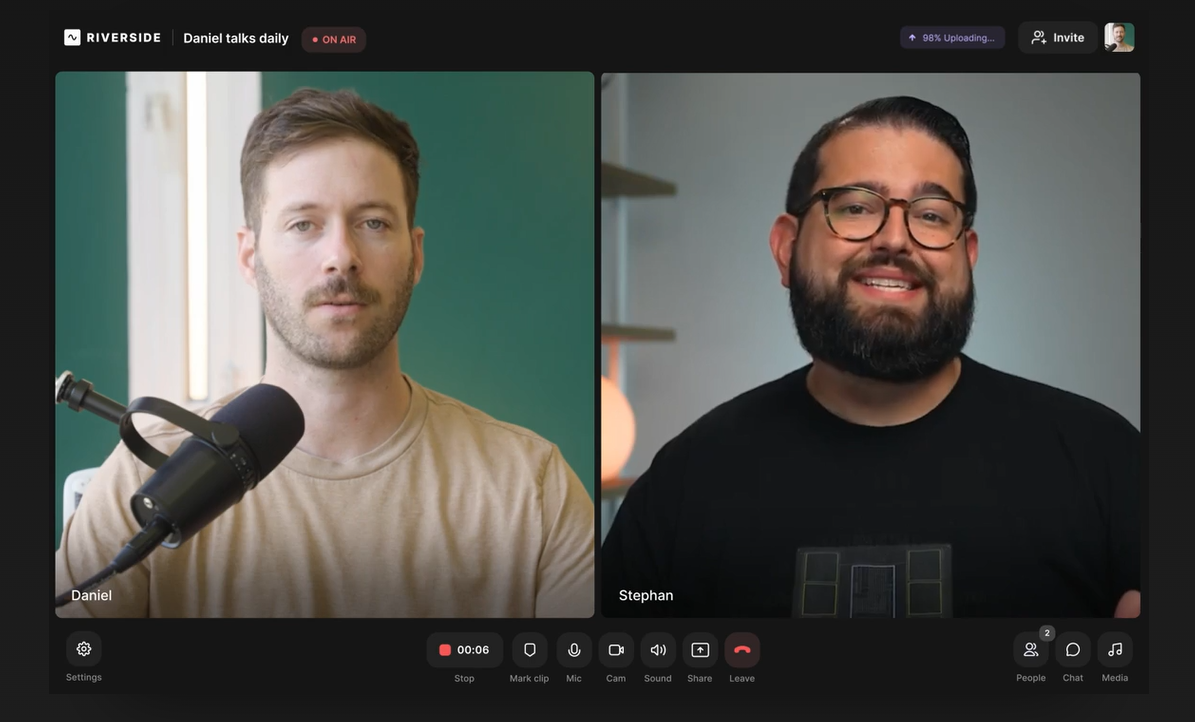
Riverside.fm is a versatile platform for podcast and video recording, offering features for individual creators, professionals, and companies.
Pros:
- High-quality audio and video recording.
- Individual synchronized tracks for each participant.
- Supports 4K video and 48kHz WAV audio files.
- AI-assisted editing, accurate transcriptions, and automatic captioning.
- Easy to use without the need for guest software downloads.
- Live streaming to social media platforms.
- Designed for a variety of users.
Cons:
- Limitations in the free version.
- Higher-quality features available only in paid plans.
- Pricing for the Business plan not listed on the website.
6. Ecamm Live
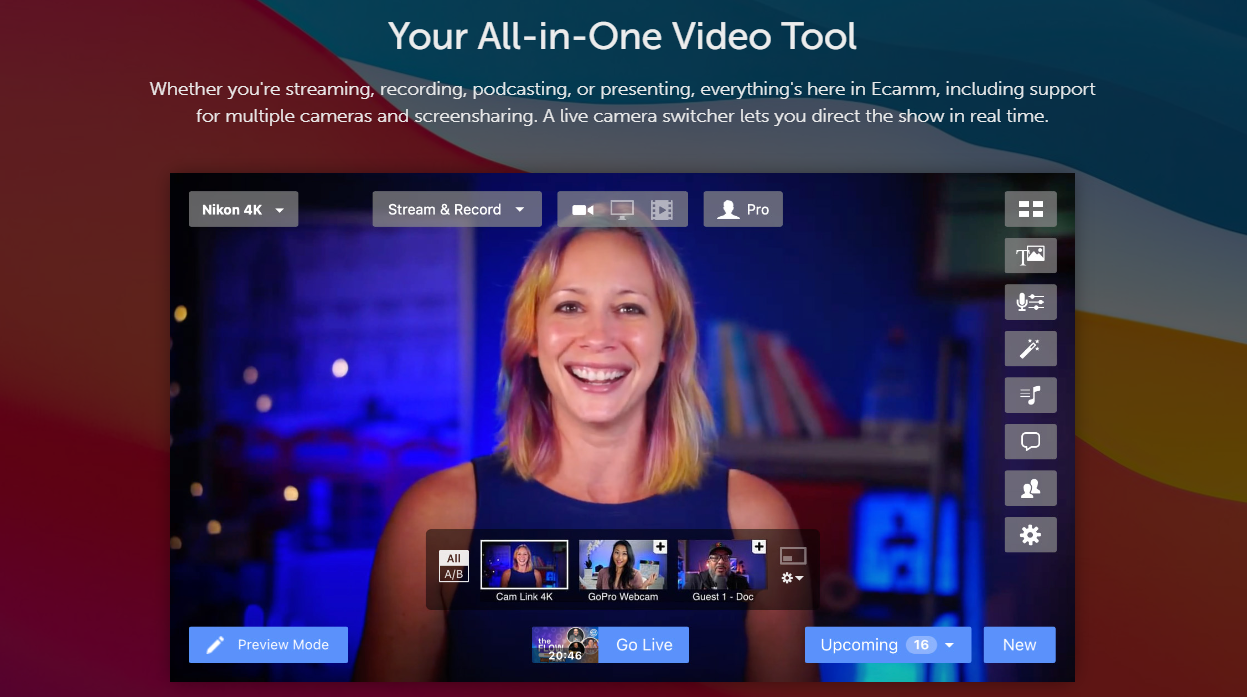
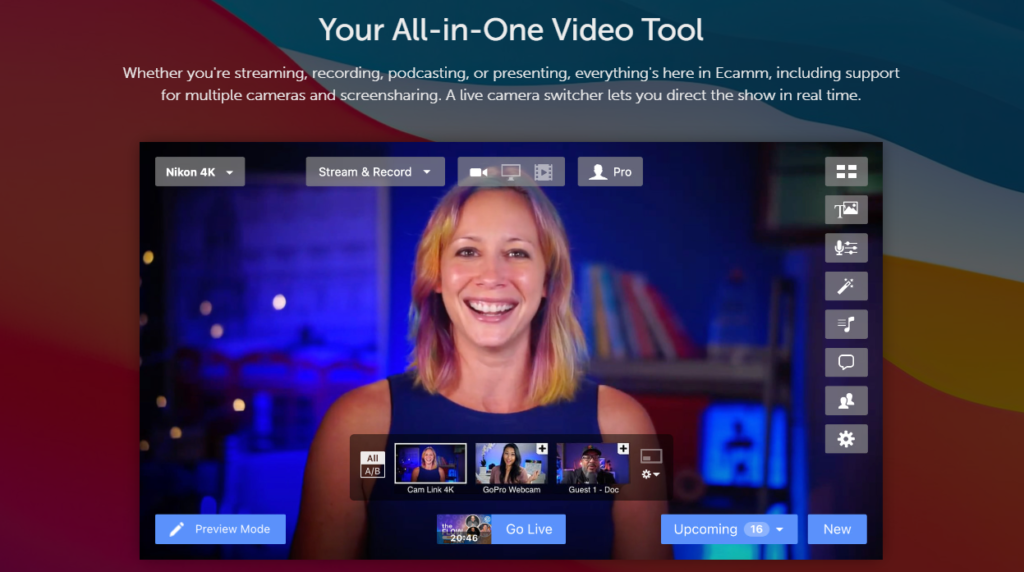
Ecamm Live is a comprehensive live streaming and video production platform exclusively for Mac users. It offers a suite of features for streaming, recording, podcasting, and presenting, including support for multiple cameras and screen sharing.
Pros:
- Clean and easy-to-navigate interface.
- Seamless integration with major streaming platforms.
- Basic customization options for overlays and alerts.
- Up to 4K 60fps streaming support.
- Direct integration with Skype for guest additions and interviews.
- Isolated video and audio track recording.
- Responsive and helpful customer support.
- Versatile tool for audio, screen, and video recording.
Cons:
- No mobile app for iPhones.
- Some advanced features missing.
- Exporting settings for use on other machines can be challenging.
7. Restream Studio
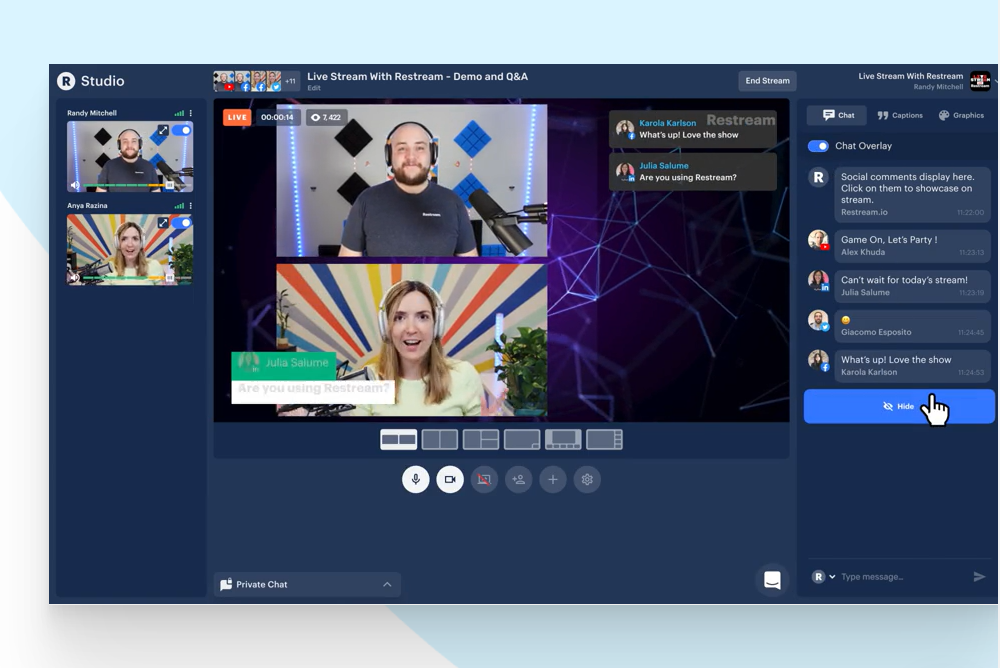
Restream Studio, a feature of Restream, is a cloud-based live streaming platform known for its versatility and ease of use. It allows multi-platform streaming, live call-ins, and interaction during recording sessions, along with detailed insights into streaming performance and audience metrics.
Pros:
- Free plan with sufficient features for beginners.
- Easier setup compared to similar platforms.
- Live streaming on over 30 platforms.
- Uploading and broadcasting pre-recorded videos.
- Creating streaming channels on the platform.
- Integrating chats from different platforms.
- Special features to boost video interaction.
- Detailed insights and analytics.
- Works well on major operating systems.
Cons:
- Full HD streaming available only in paid plans.
- Relatively high paid subscription prices.
- No support for 2K and 4K video streaming.
- Restrictions on stored pre-recorded videos.
- Some features exclusive to paid subscribers.
- Watermarks cannot be removed without the upgrade.
- Inability to stream two different videos simultaneously.
- Streaming quality depends on the internet connection.
- Separate tools required for advanced video editing.
8. OneStream
OneStream Live is a cloud-based streaming service that offers a blend of features and limitations. It supports broadcasting to over 45 platforms simultaneously, with options for live and pre-recorded video streaming. OneStream ensures good audio and video quality and provides comprehensive analytics and support.
Pros:
- Broadcasting to over 45 platforms simultaneously.
- Live and pre-recorded video streaming options.
- Recording and downloading streams.
- Good audio and video quality.
- User-friendly interface.
- Advanced scheduling options.
- Customization options for logos and watermarks.
- Comprehensive analytics.
- Support for major cloud providers.
- Large user community.
Cons:
- Narrower range of video formats supported.
- Storage capacity restrictions.
- Issues with early adoption plan features.
- Advanced features exclusive to Professional plan.
9. Lightstream Studio
Lightstream Studio allows you to create live streams directly from your browser, eliminating the need for additional equipment or software downloads. It offers unrestricted control over stream layout, integrates with other platforms for on-stream alerts and social media messaging, and provides mobile device control for on-the-go streamers.
Pros:
- No additional equipment or software downloads required.
- Unrestricted control over stream layout.
- Integration with other platforms for alerts and messaging.
- Mobile device control for on-the-go streamers.
- Multiple plans with a 7-day free trial.
- Tailored features for different streamer types.
Cons:
- Limited advanced production features.
- Stream quality dependent on internet connection.
- Limitations on maximum streaming resolution.
- Participant restrictions for some project types.
10. Twitch Studio
Twitch Studio is Twitch’s own streaming software designed for new streamers to easily get started with broadcasting. It offers seamless integration with Twitch services and features, along with basic customization options for overlays and alerts.
Pros:
- Designed for beginners.
- Seamless integration with Twitch services.
- Basic customization options.
Cons:
- Focused primarily on Twitch.
- Lack of advanced features compared to other software.
11. FFmpeg
FFmpeg is a versatile open-source software widely used for various multimedia processing tasks, including live streaming. It offers extensive functionality for video, audio, and image processing and benefits from a large and active community of users and developers.
Pros:
- Open-source and free to use.
- Available for various operating systems.
- Wide range of multimedia processing capabilities.
- Large community and abundant online resources.
- Real-time encoding and streaming support.
- Highly customizable encoding parameters.
Cons:
- Command-line interface may be intimidating for some users.
- Extensive functionality may require a learning curve.
- Open-source nature can lead to occasional bugs or issues.
12. VidBlasterX
VidBlasterX is a live streaming and video production software that offers powerful features for live event production and IMAG output. It supports multiple cameras and various input sources, and includes features like multi-channel slow-motion and instant replay.
Pros:
- Robust video production features.
- Multiple camera support.
- Tailorable interface.
- Ultra-low latency for live events.
- Various video effects and overlays.
- Support for SD, HD, and up to 4K resolutions.
- Simplified audio mixing and control.
- API commands and custom scripting for automation.
Cons:
- Complexity may be overwhelming for beginners.
- Requires significant resources.
- Incompatibility with some operating systems.
13. SplitCam
SplitCam is a solid choice for users seeking a free, user-friendly live streaming solution with capabilities for multi-platform streaming and audio mixing. It allows splitting webcam feeds and supports major streaming platforms.
Pros:
- Completely free.
- Advanced functionalities for live video streaming.
- Simultaneous streaming to multiple platforms.
- Split webcam video into different applications.
- Mixing audio and adding customization options.
- Compatible with major streaming platforms.
Cons:
- Watermarks on videos.
- Not as feature-rich as some competitors.
14. Prism Live Studio
Prism Live Studio is a versatile tool for live streaming and video content creation, notable for its user-friendly interface, compatibility with various gadgets, and innovative features like beauty effects and virtual chroma key.
Pros:
- Supports various gadgets using web functionality.
- User-friendly interface.
- Simultaneous streaming to multiple platforms.
- Supports OBS plugins and functionalities.
- Beauty effects and virtual chroma key.
- Customizable background effects and webcam appearance.
- Automatic face recognition technology.
- Mobile app integration for live streaming.
Cons:
- No pre-built themes.
- Limited audio effects and VST compatibility.
- Some advanced features missing.
- Requires learning custom CSS for customization.
- Certain premium features unavailable.
15. FFSplit
FFSplit is a free, straightforward live streaming and recording software, popular among Windows users. It supports multiple video sources and formats and offers customizable options to enhance the streaming and recording experience.
Pros:
- Freeware with a user-friendly interface.
- Capturing videos from various sources.
- Live streaming and local recording.
- Optimized for high performance.
- Support for major streaming services.
- Customizable options for enhanced streaming.
Cons:
- Limited to Windows users.
- Some advanced features missing.
- Rarely updated.
16. Switchboard Live
Switchboard Live is a powerful tool for multi-platform streaming, ideal for increasing engagement and ROI in social media and digital marketing initiatives. It allows simultaneous broadcasting across multiple channels with real-time monitoring, directing, and switching between inputs and workflows.
Pros:
- Simultaneous streaming to various channels.
- Monitoring, directing, and switching between inputs.
- Real-time stream editing and metadata updates.
- Robust analytics for performance tracking.
- Channel-specific results export.
- Watermarking and quality adjustment.
- Powerful API for automation.
Cons:
- Support team follow-up and resolution issues reported.
- Less appealing user interface after login.
- Dark mode not available.
Each software has its unique strengths and weaknesses, and the best choice depends on your specific needs and skill level. Advanced users might prefer Wirecast or vMix, while beginners or those on a budget might lean towards OBS Studio or XSplit Broadcaster. Choose the software that aligns with your goals and take your live streaming experience to new heights.
Conclusion
Whether you’re an influencer, gamer, online educator, or business, the right live streaming software can amplify your message and reach. With the wide variety of options available, it’s essential to consider factors like audience size, feature set, ease of use, and budget when choosing the best software for your needs. Explore the top 16 live streaming software we’ve ranked, and make an informed decision to leave a lasting impression on your viewers.
FAQs About Live Streaming Software
Q: What is live streaming software, and how does it work?
A: Live streaming software is an application or platform that allows you to broadcast live video and audio over the internet. It captures and encodes audio and video from various sources, enabling you to mix, add graphics, text overlays, and distribute the content to platforms like YouTube and Facebook.
Q: Why is live streaming popular in 2024?
A: Live streaming has gained popularity due to the increased preference for video content and the convenience of consuming and sharing live videos, especially after the pandemic. Video streaming platforms have become a necessity when most of our audience is present online.
Q: How do I choose the best live streaming software?
A: When selecting live streaming software, consider factors like the purpose of your stream, audience size, software features, ease of use, compatibility, bandwidth requirements, cost, customization options, customer support, analytics, monetization options, and scalability.
Q: What are the pros and cons of OBS Studio for live streaming?
A: OBS Studio is free and open-source, offering high-quality video/audio capture and mixing, customizable transitions, and a user-friendly interface. However, it may be overwhelming for new users and requires stable internet connections and manual settings adjustment.
Q: Can live streaming software support large audiences without quality issues?
A: Yes, certain live streaming software is designed to handle large audiences without compromising quality. Choose software that supports higher bandwidth and streaming quality to accommodate larger audience sizes.
Q: Is there free live streaming software available that offers professional features?
A: Yes, there are free live streaming software options like OBS Studio that offer professional features. Free versions often include functionalities like multiple source mixing, encoding, and overlays, though more advanced features might require a paid version.